 English
  Español
 Te Moai Rapa Nui
Dear Friends of EISP,
Today we have good news to share with you! The publication of our forthcoming volume, Te Moai Rapa Nui, so long in preparation, is imminent! It is a 600 page volume in five parts exploring the art and science of Rapa Nui as discovered by the EISP team during our four decades of archaeological field work and excavations. It is enriched by the contributions of 34 international colleagues with equal experience of Rapa Nui, 108 originally produced maps, and the drawings of Rapanui artist Cristián Arévalo Pakarati. We are especially pleased to publish our findings with the world-renowned Cotsen Institute of Archaeology Press, which will also include an online Supplemental Data presentation.
For those of you who have visited the island or hope to do so, and so many others who have expressed interest in the incomparable moai, we offer an opportunity to add your name and email address to a private list of those interested in purchasing a copy of the atlas. The list will go to the CIOA Press and you will be contacted directly to initiate the sale. This volume, and the maps in it, are said by reviewers to be an “archaeological tour-de-force,” and the excavations we conducted in Rano Raraku, the statue quarry, to be “a case study” in salvaging every bit of available information. We are enormously proud of this accomplishment, as you can imagine, and pleased to share it with all of you!
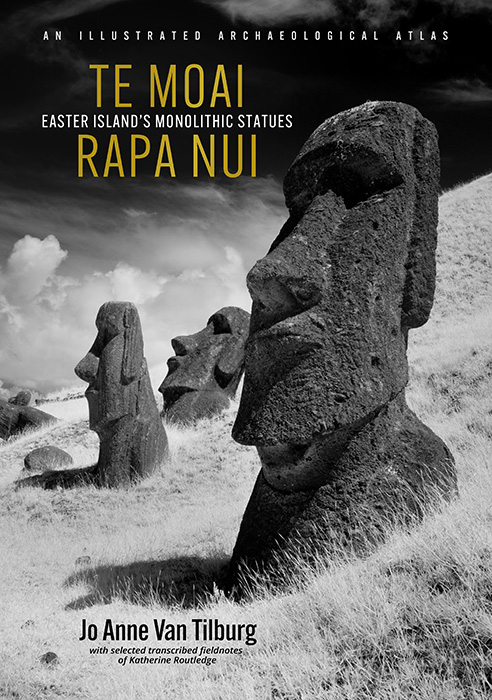
Te Moai Rapa Nui
Easter Island’s Monolithic Statues
An Illustrated Archaeological Atlas
Jo Anne Van Tilburg
with selected transcribed fieldnotes by Katherine Routledge
This volume is the first illustrated archaeological atlas of Easter Island (Rapa Nui). Discovered by Polynesian explorers ca. 900 CE, Rapanui society encountered the Western world for the first time in 1722, an event followed by 48 years of isolation until the next foreign ship appeared on the horizon. That liminal period, and other formidable events in Rapanui culture history, are examined through an integrated, art-and-science approach and a contextually holistic research strategy. Seminal ecological research in multiple scientific fields is united with island-wide archaeological survey data generated by international contributors to this atlas.
At the heart of this volume is a decades-long study of the attributes, characteristics, and situations of 1,040 monolithic sculptural objects (moai). Each is described through research carried out by Jo Anne Van Tilburg and her team. Excavations in Rano Raraku statue quarry reveal ancient engineering methods. Thousands of survey points plotted on 108 original, illustrated maps link the moai to habitation and agricultural features, while museum objects and artifacts, along with historical maps and photographs, offer social context. The transcribed fieldnotes of ethnographer Katherine Routledge, and the accurate and expressive moai drawings by Rapanui artist Cristián Arévalo Pakarati, provide cultural depth.
Forthcoming
UCLA Cotsen Institute of Archaeology Press
Sign up for the private email wait list.
Phase 2 Season 2
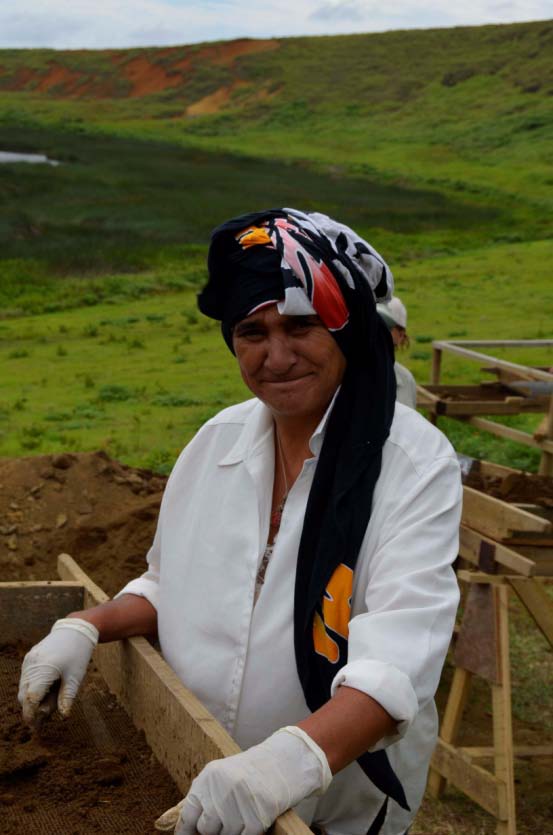
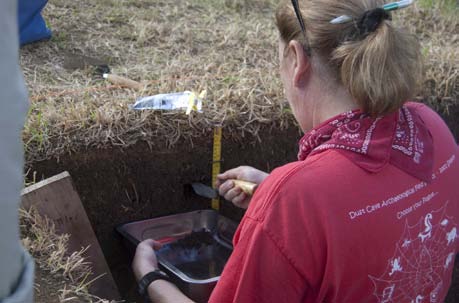
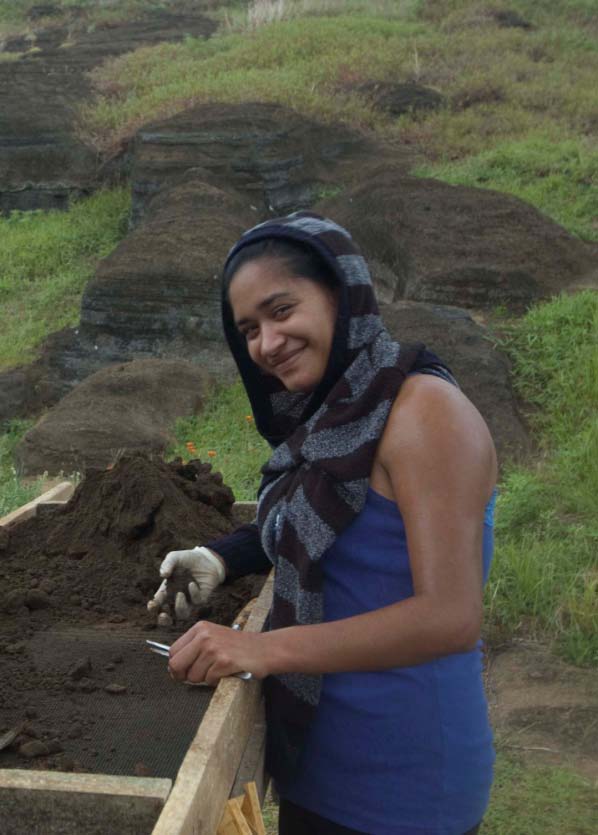
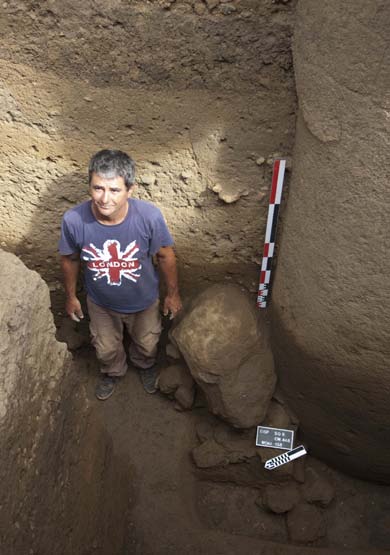
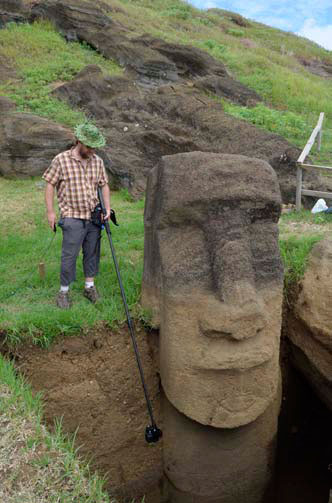
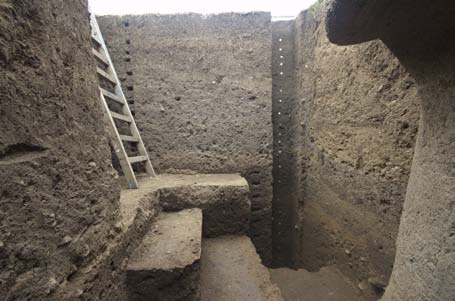
Easter Island Statue Project
March 16 – April 14, 2014
Dr. Jo Anne Van Tilburg, UCLA Project Director
Cristián Arévalo Pakarati/ Rapa Nui Project Co-director
José Miguel Ramírez A., Universidad de Valparaiso, Co-investigator
Introduction
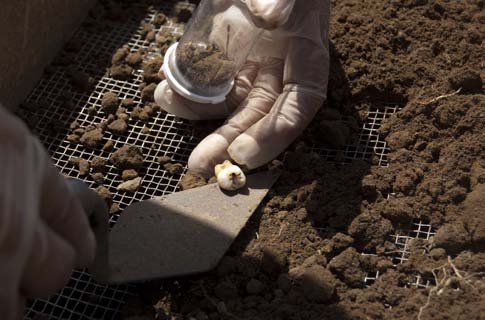
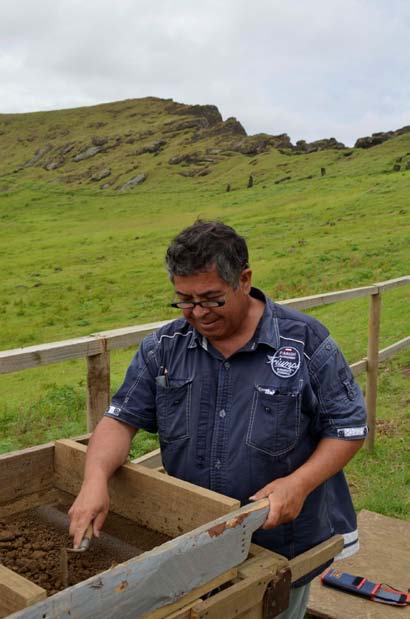
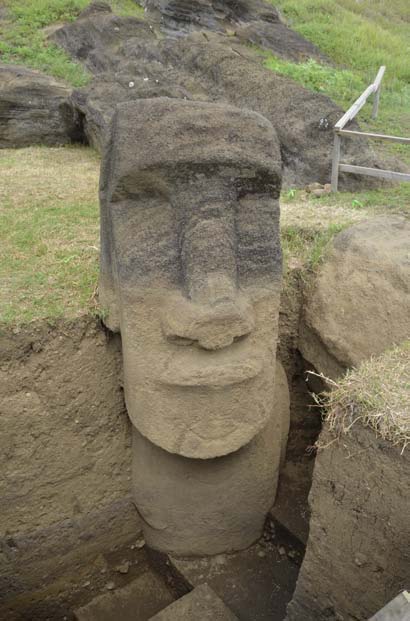
This report is prepared as part of a numbered series that describes the excavations conducted by the Easter Island Statue Project in Rano Raraku Quarry Zone, Interior Region, Quarry 02, Statues RR-001-156 and RR-001-157. The team is composed of an all-Rapanui excavation staff directed by the project Co-directors. With the completion of the conservation and scientific investigations conducted by our Chilean collaborator, Monica Bahamondez P, and our UCLA collaborator Dr. Christian Fischer, we were joined this season by our new Chilean collaborator Sr. José Miguel Ramírez A., Universidad de Valparaíso. Our research agreement is contained in a Memo of Understanding between the Universidad de Valparaíso and the Cotsen Institute of Archaeology at UCLA. This report summarizes our collections and investigations for the period beginning Monday, March 10 and ending Monday, March 14, 2014. This report is part of a preliminary final report that includes some but not all of our in-process laboratory test results and collections analyses, as per our permit CMN ORD 5467-09. A final report will be published in 2015-2016 by the The Cotsen Institute of Archaeology Press.
Phase 2 Season 1
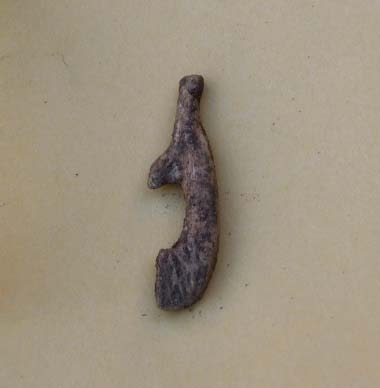
Easter Island Statue Project Phase 2, Season 1
August 2013
Jo Anne Van Tilburg and Cristián Arévalo P.
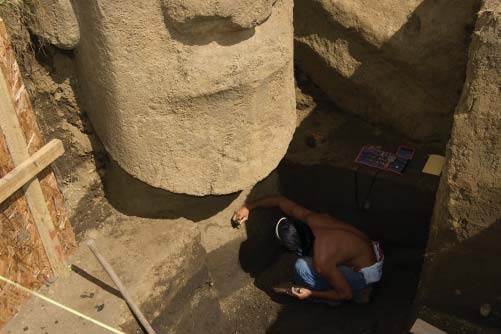
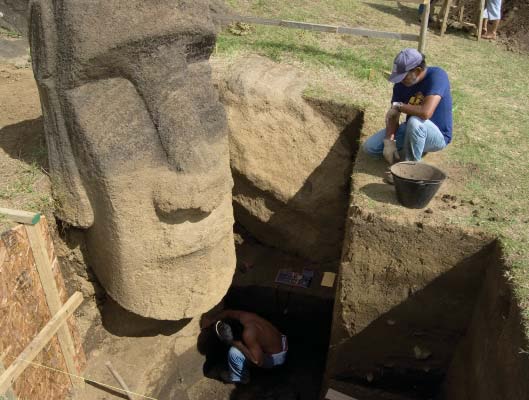
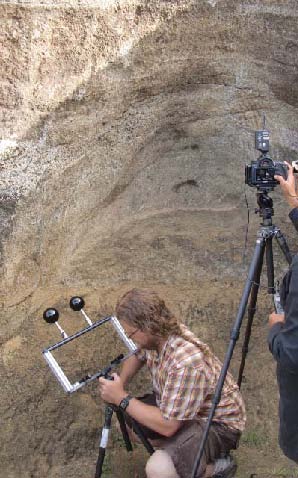
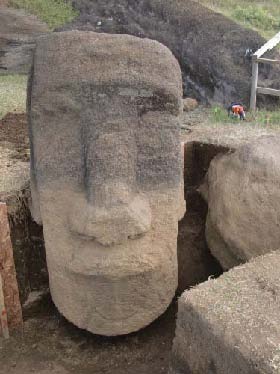
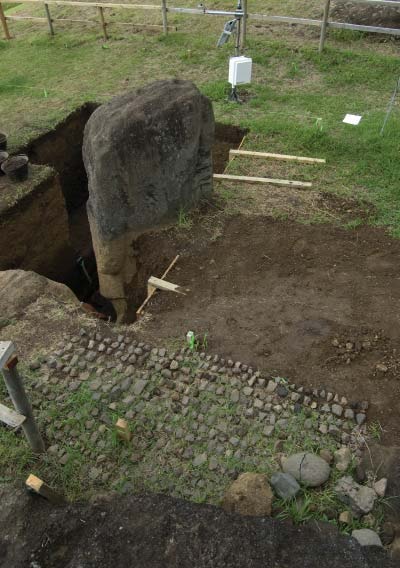
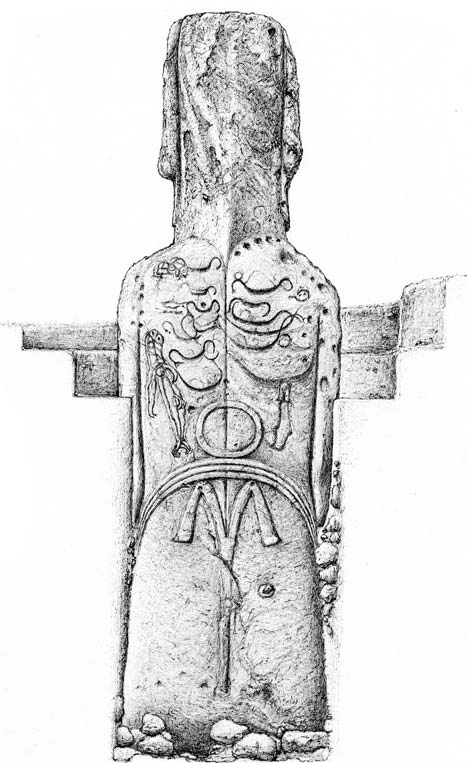
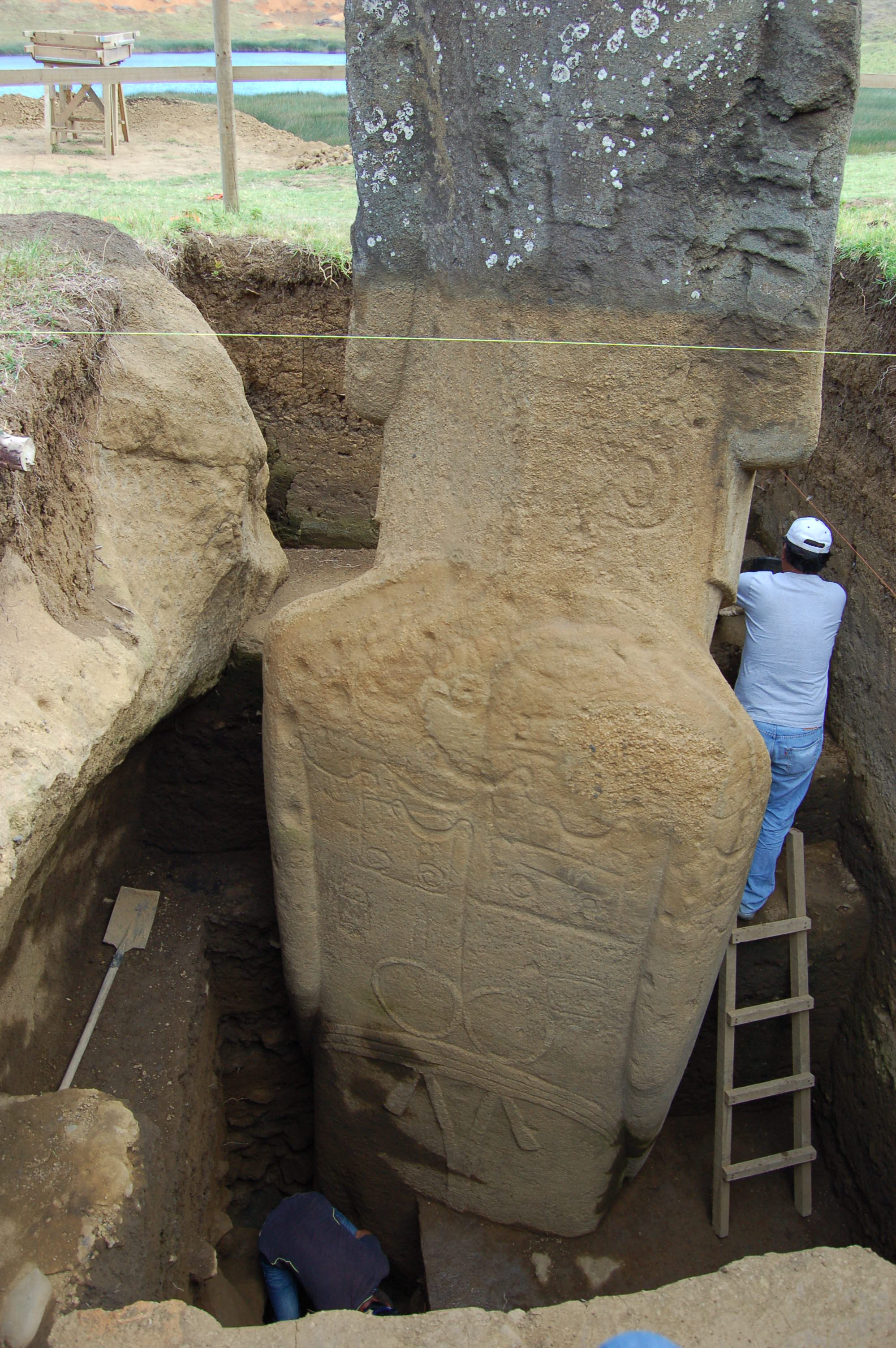
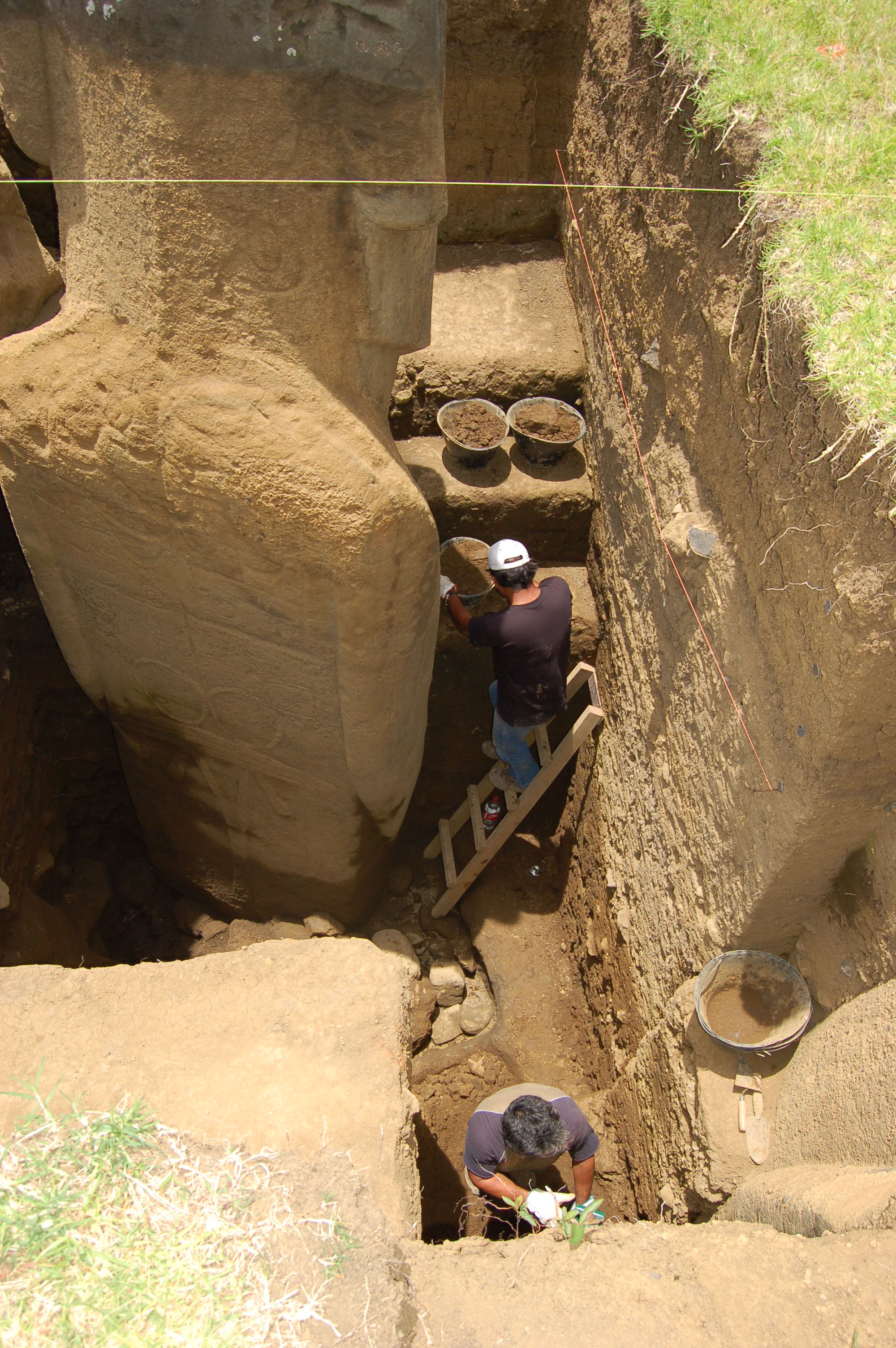
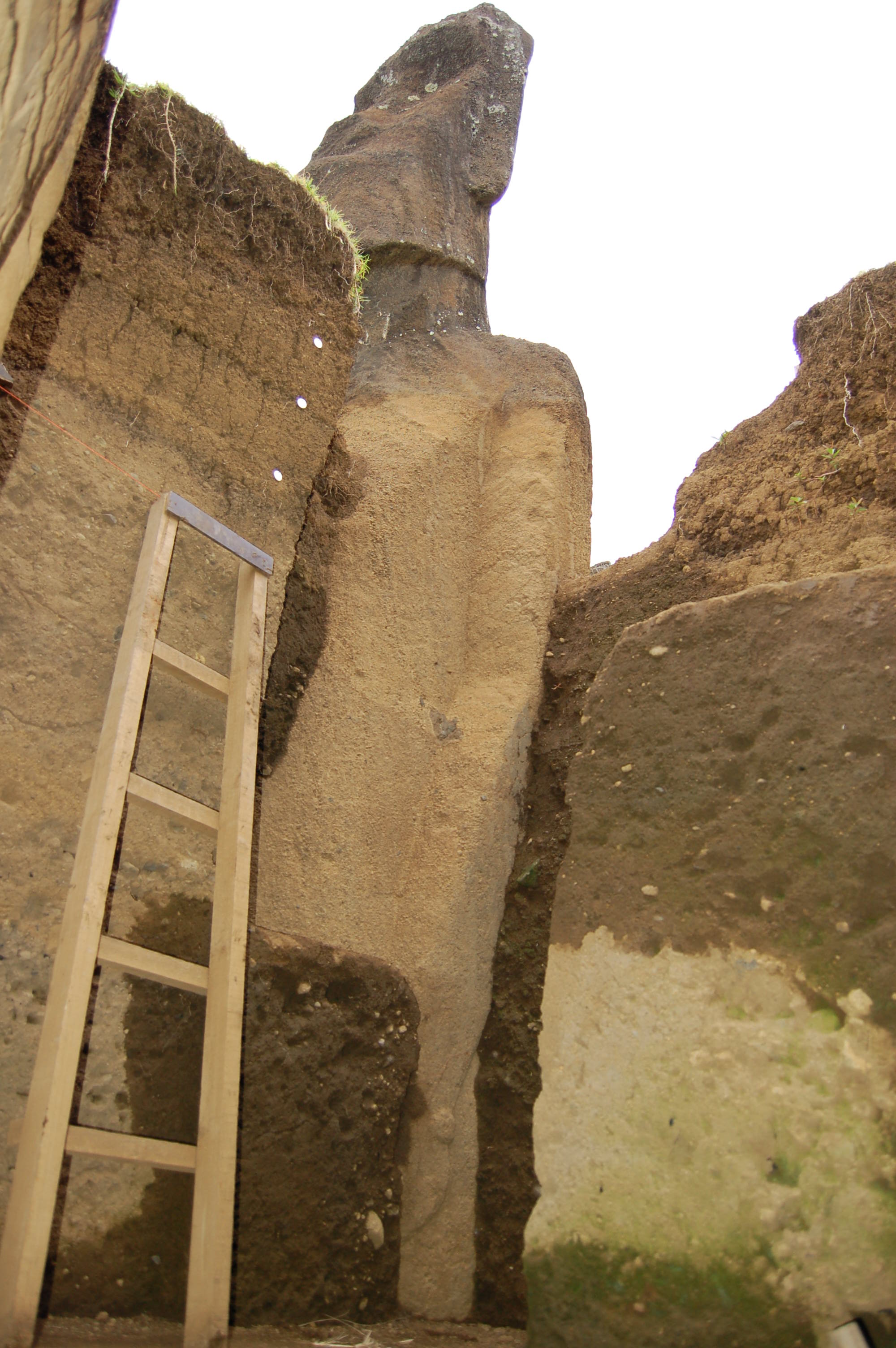
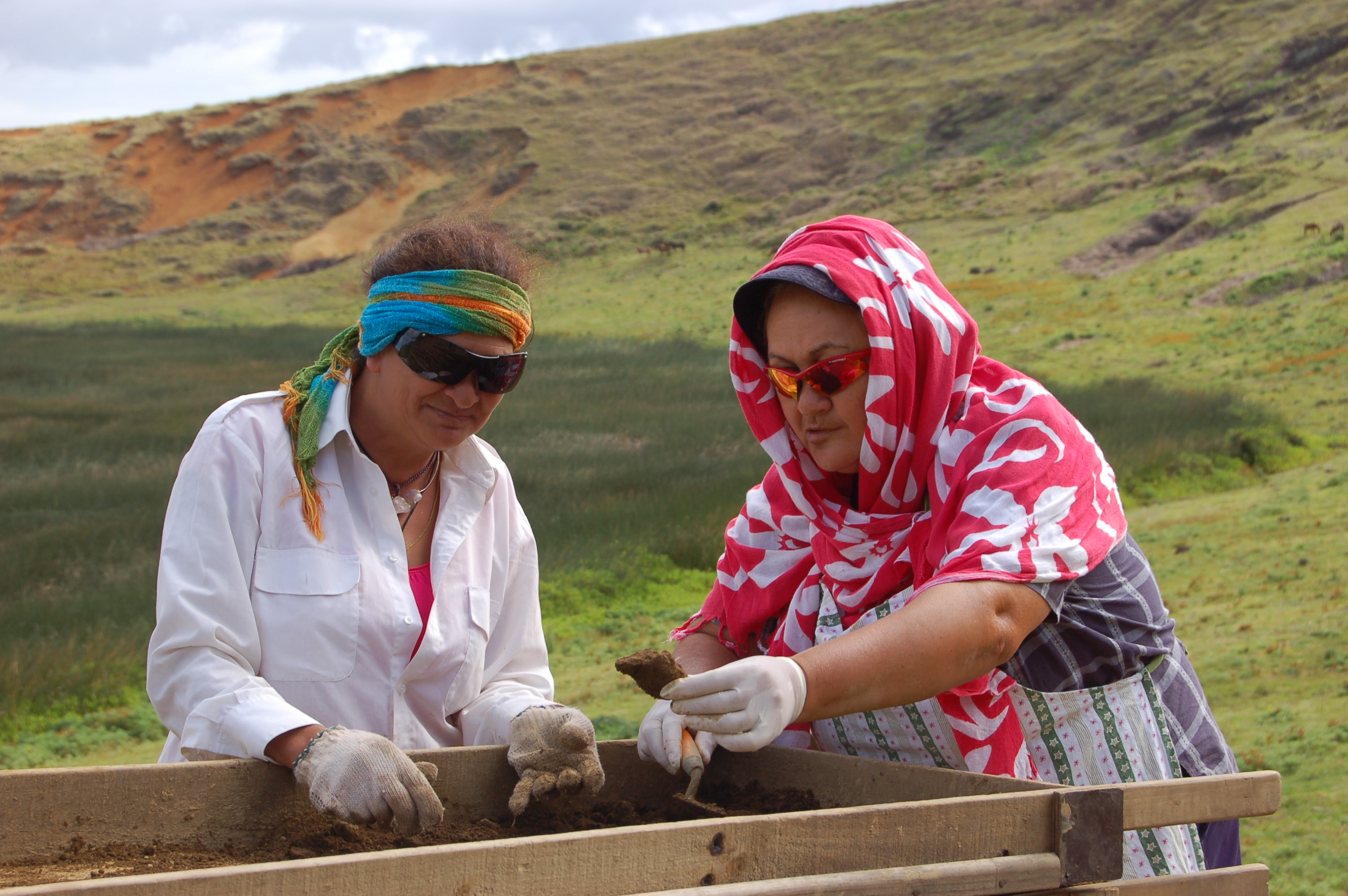
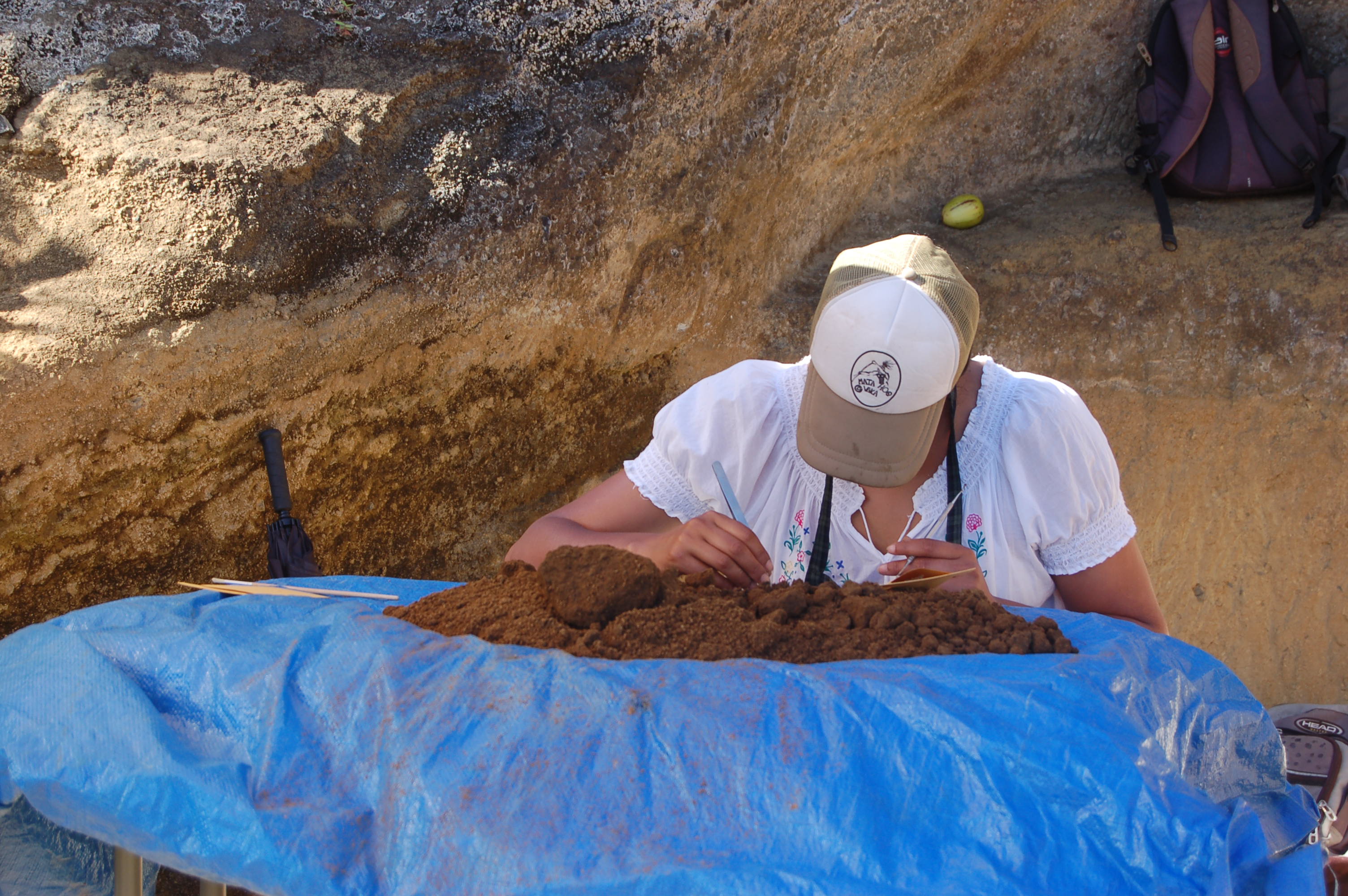
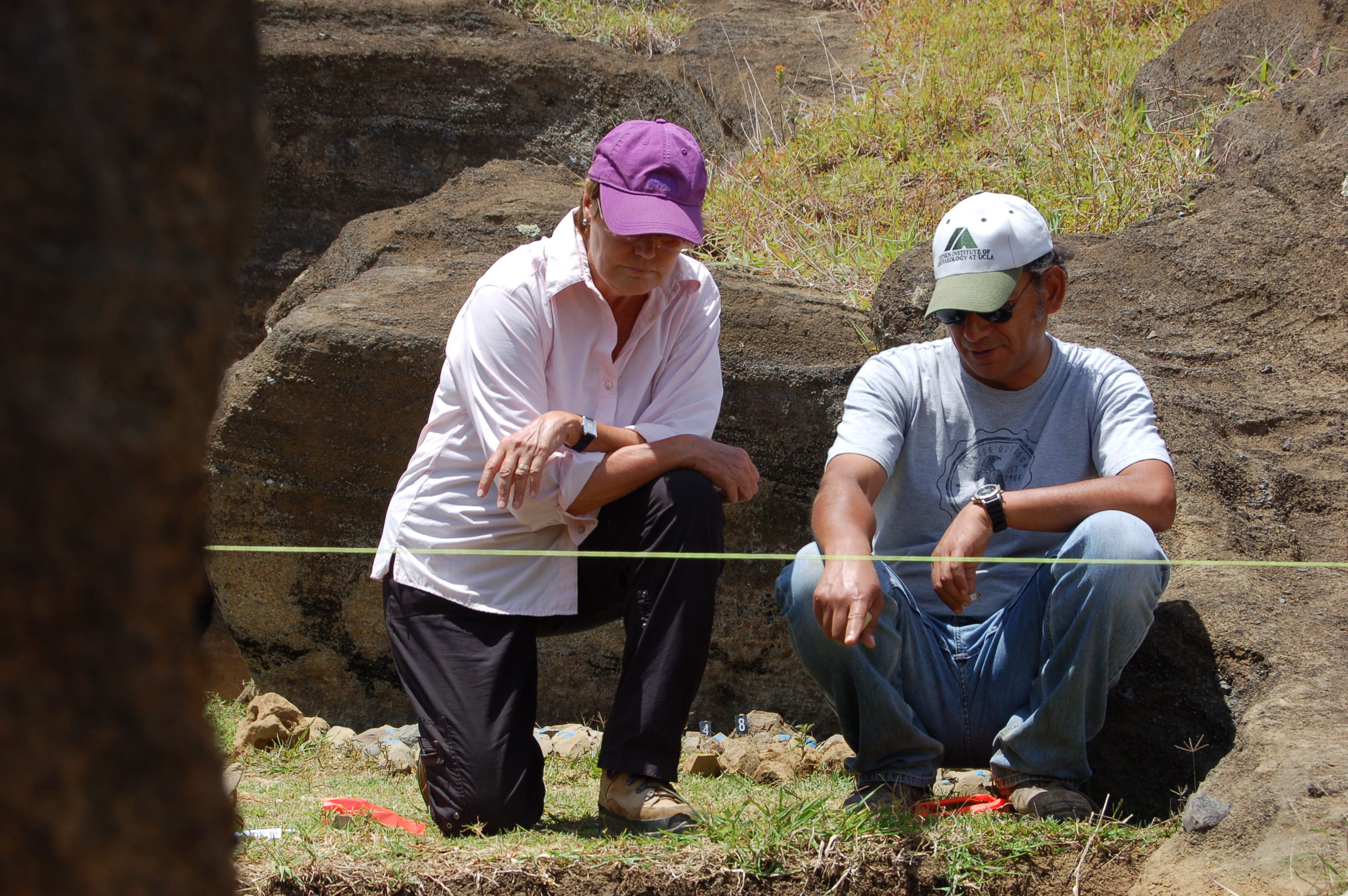
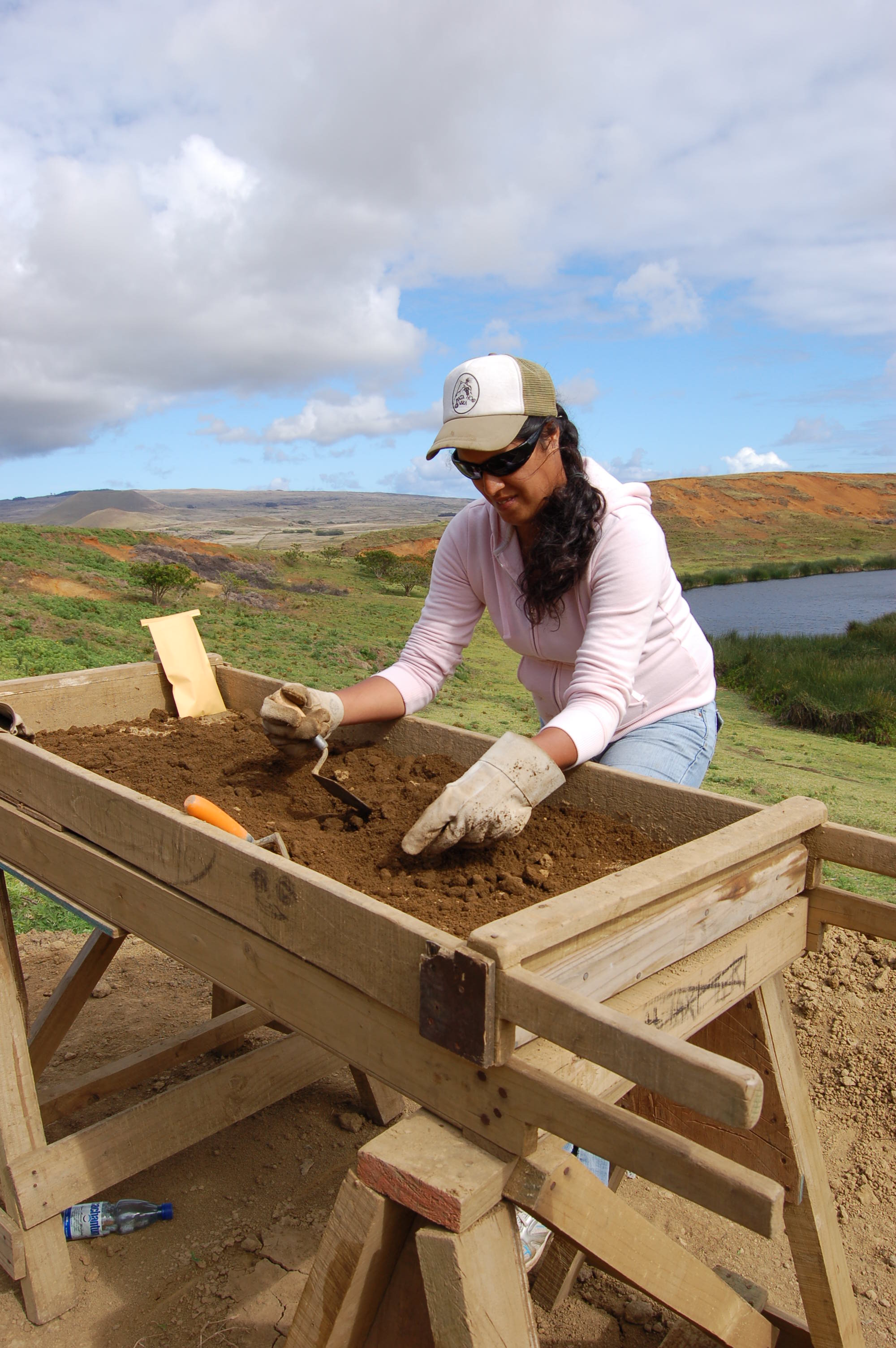
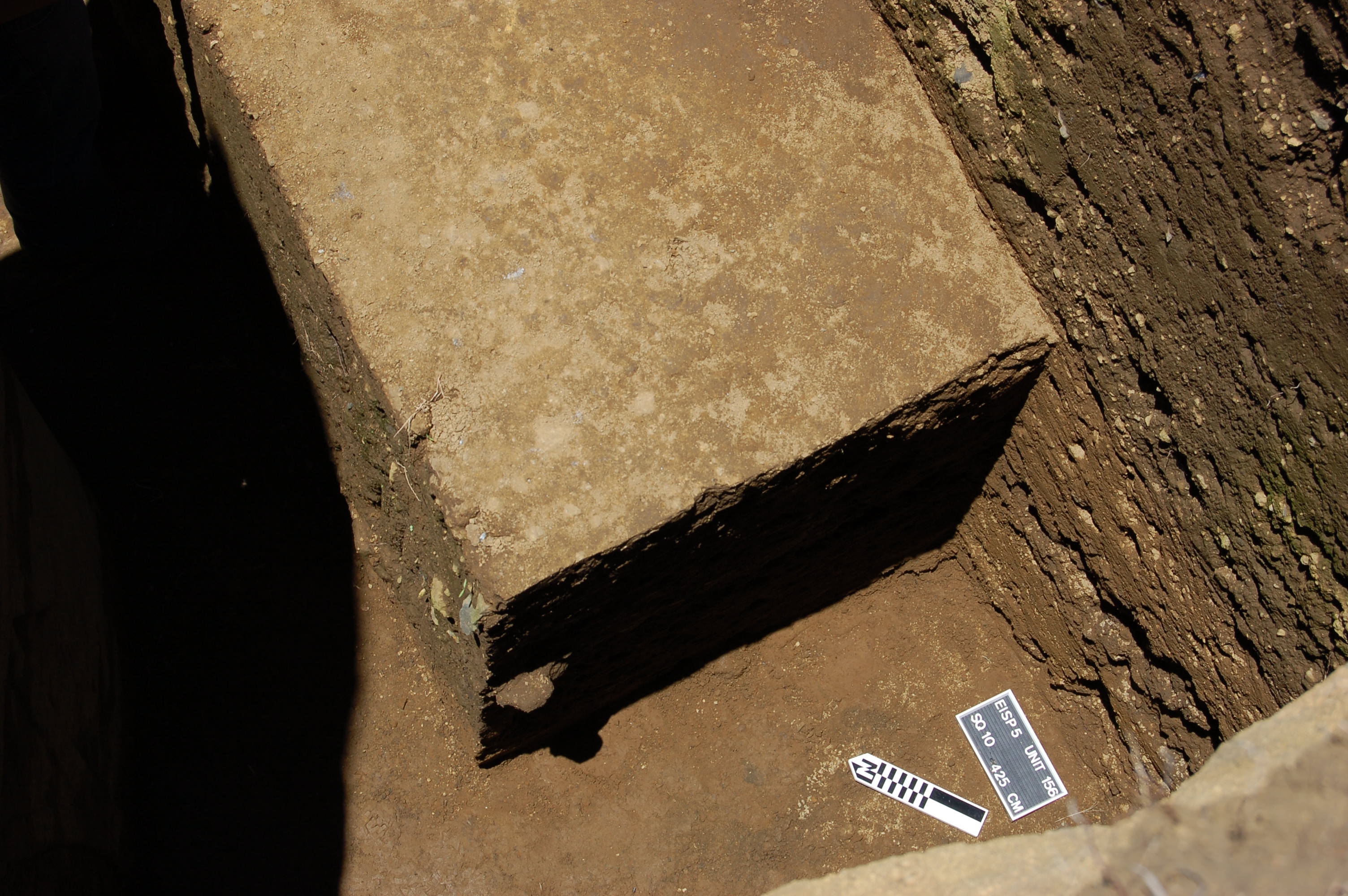
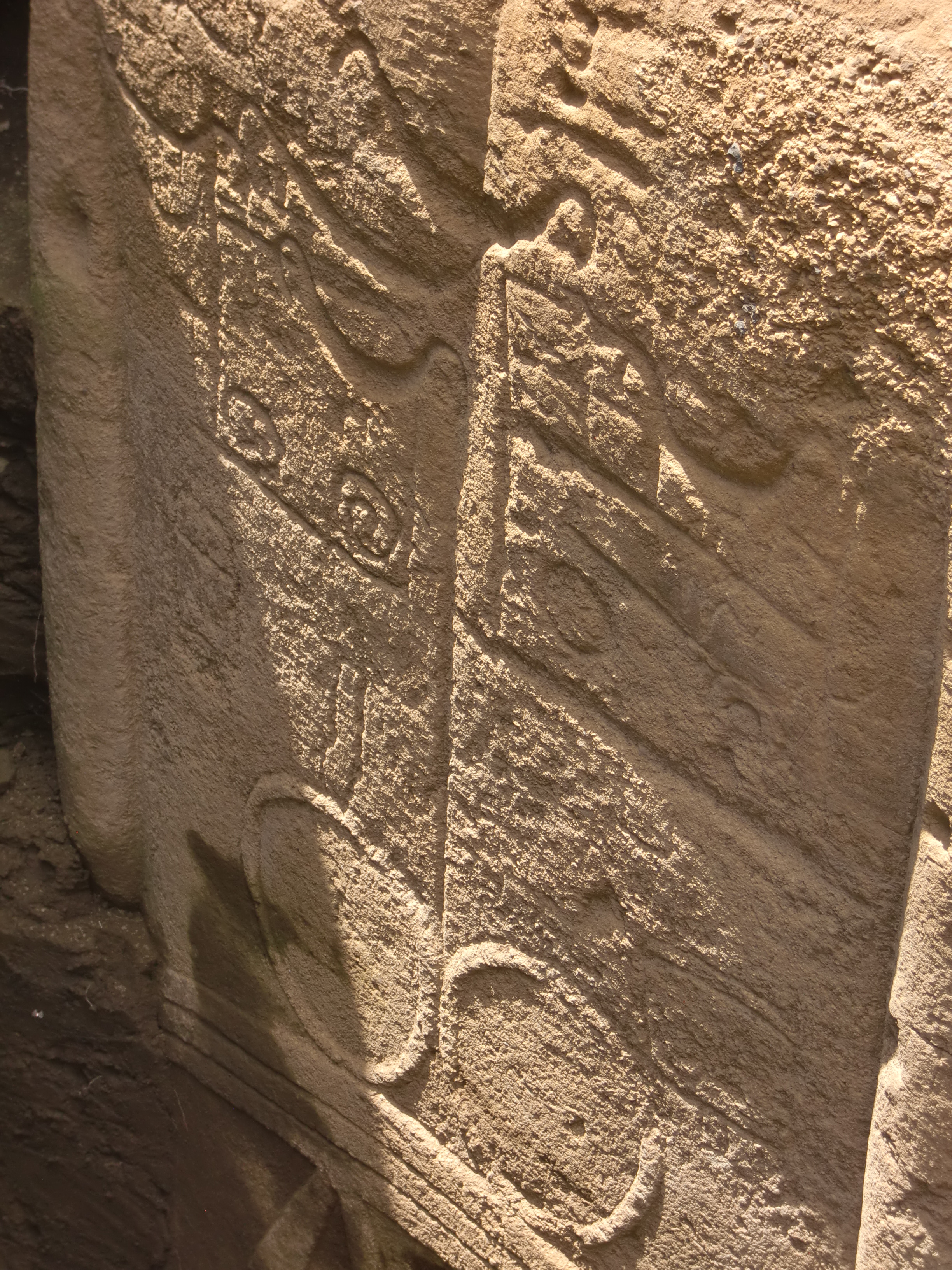
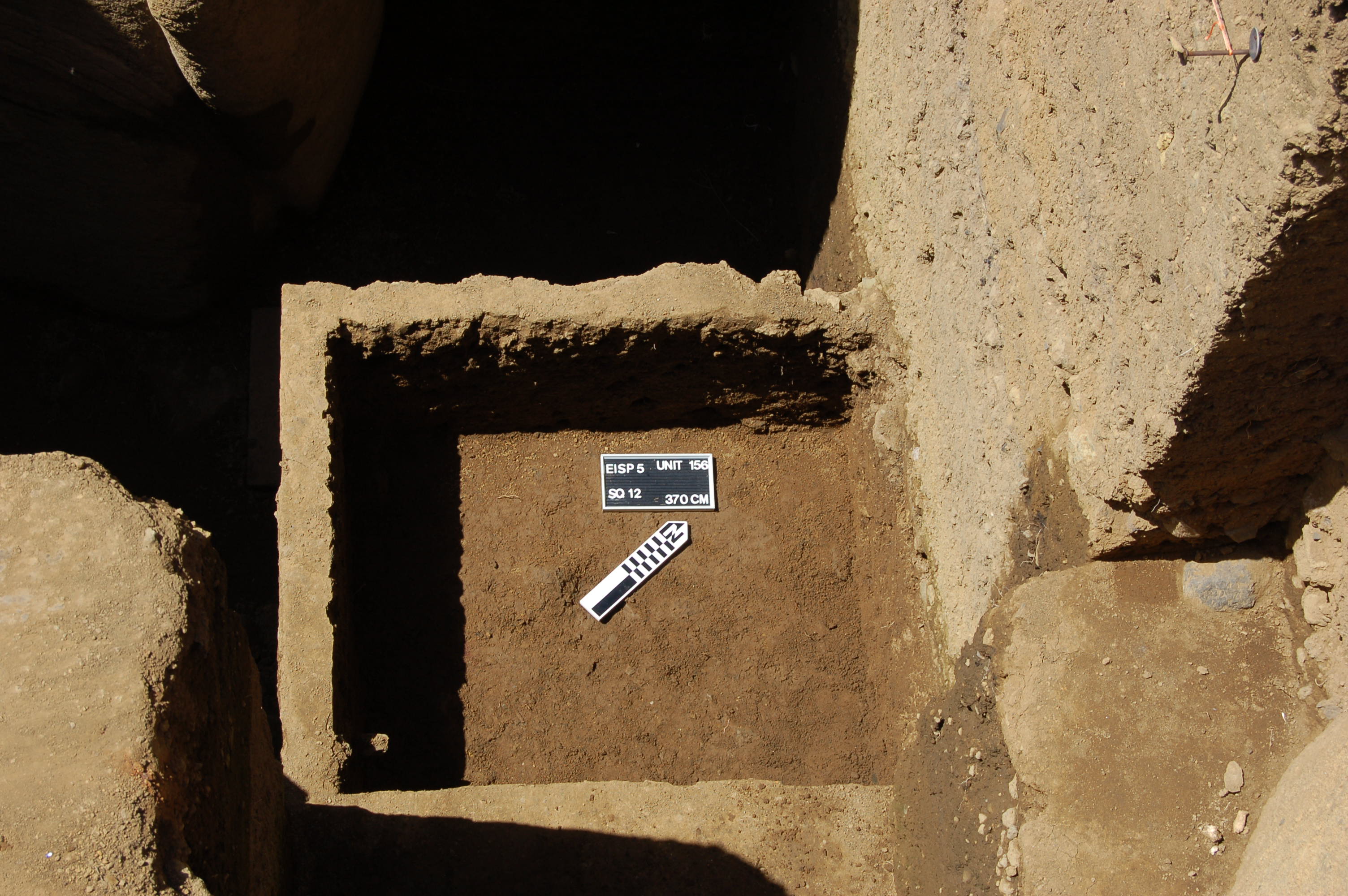
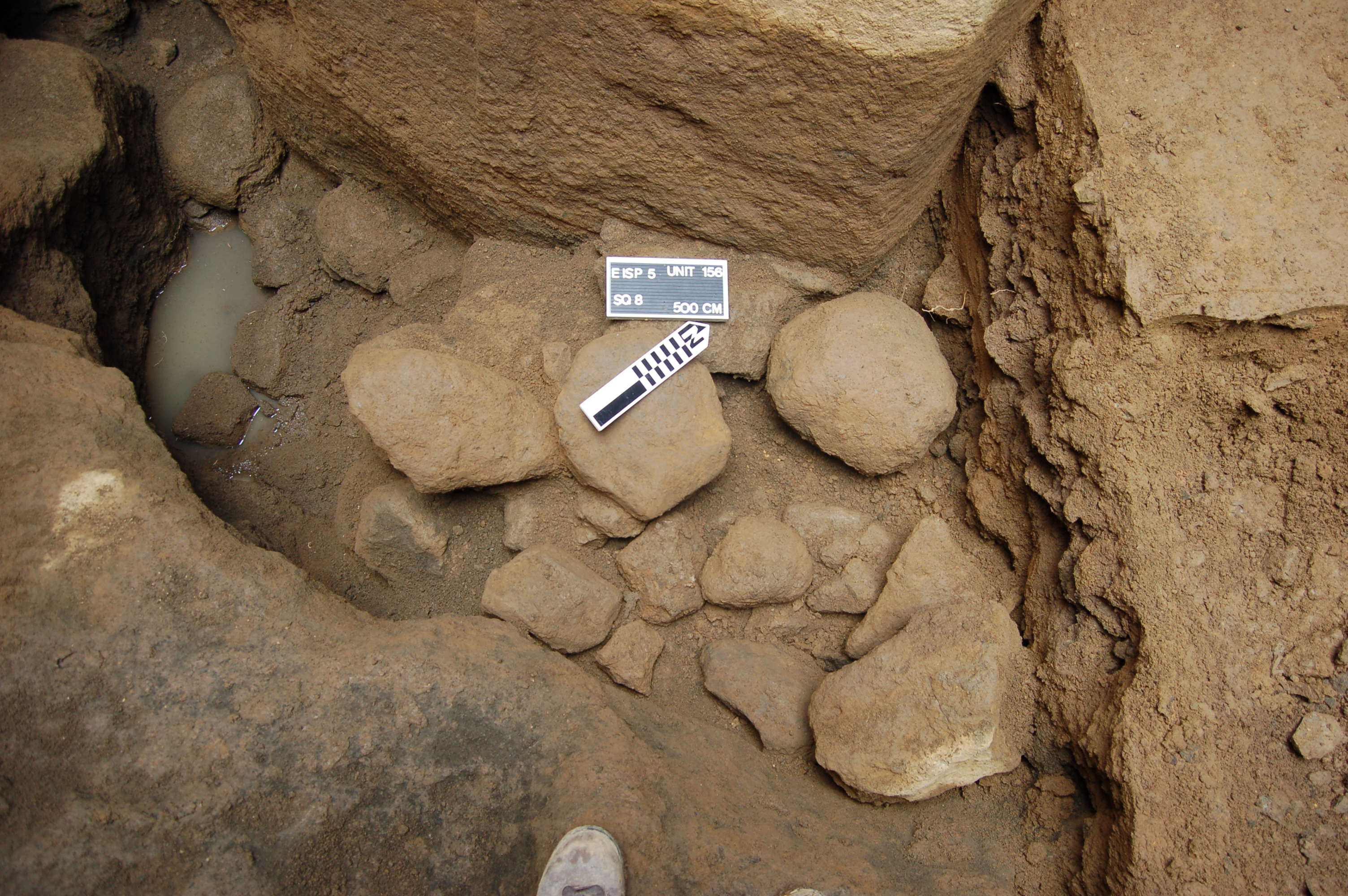
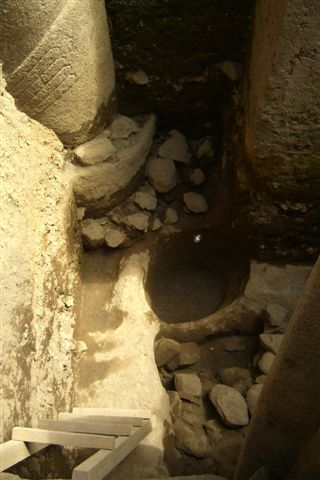
This report describes recent excavations beginning Phase 2 of the project and concentrating on the ventral side of Moai RR-001-156. These excavations are a continuation of limited excavations conducted on the ventral side during Phase 1, which focused on reaching the base of the statue on the dorsal side. The excavation season commenced on August 6, 2013 and actual excavation ended on August 29, 2013. The excavation was subsequently closed to protect it from heavy rains and with the help of personnel from CONAF and CMN.
Phase 1 Season 6
Easter Island Statue Project (EISP) Conservation Initiative
March 2012
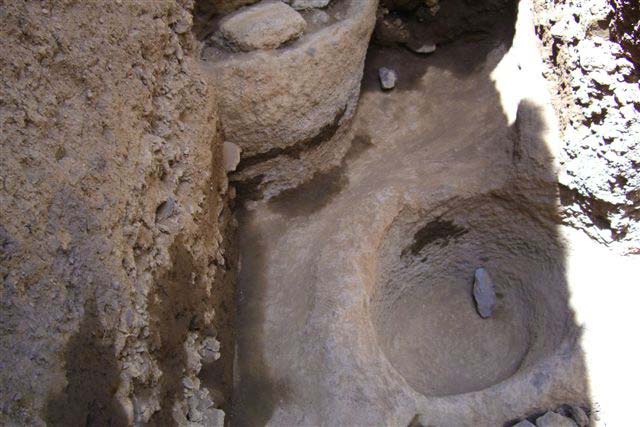
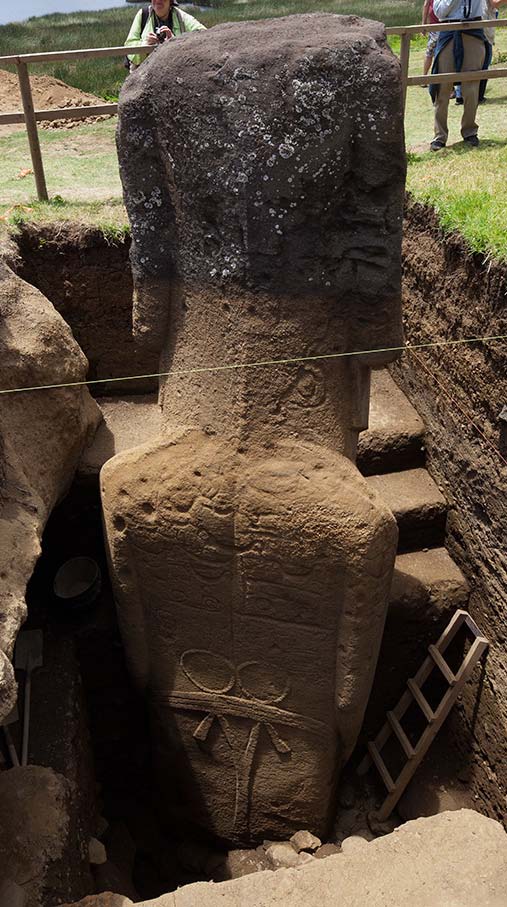
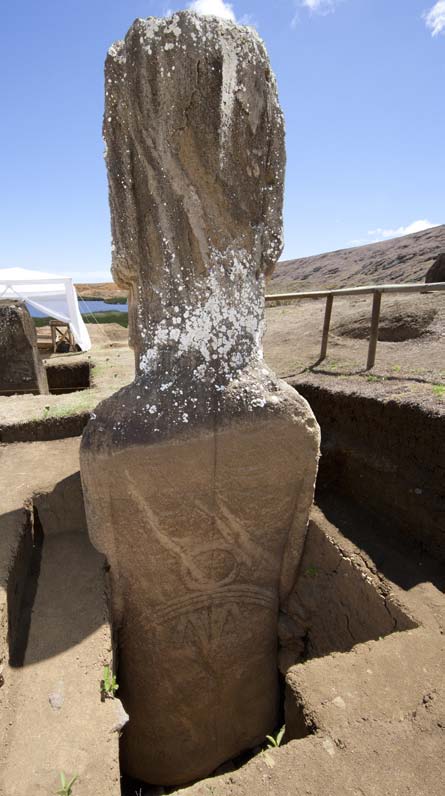
Jo Anne Van Tilburg and Cristián Arévalo Pakarati have accomplished an archaeological survey and inventory of the monolithic stone sculpture (moai) of Rapa Nui. To date, we have accounted for 1,300 monolithic sculptural objects within the island-wide survey sections, in museum collections, and within the Rano Raraku quarry zone, including complete (as opposed to intact) statues, heads, torsos, fragments, shaped block. The latter are considered to be evidence of human activity in the form of incomplete or abandoned projects elucidating energy investment. The most recent object entered into our collaborative on-line database (DATASHARE) is a red stone torso submitted by Enrique Tucki M. of the Oficina Provincial, the Corporación Nacional Forestal (CONAF).
Phase 1 Season 5
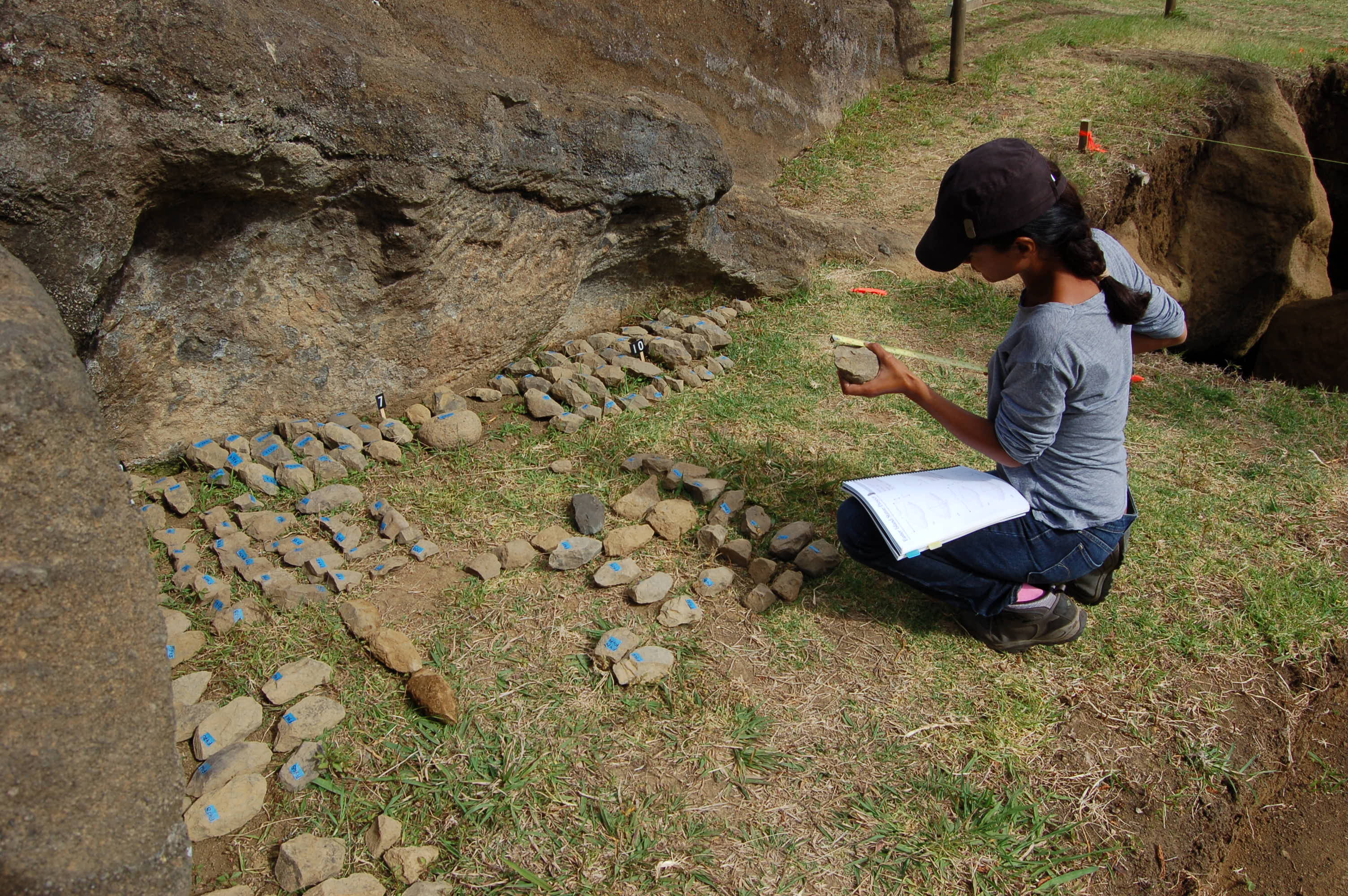
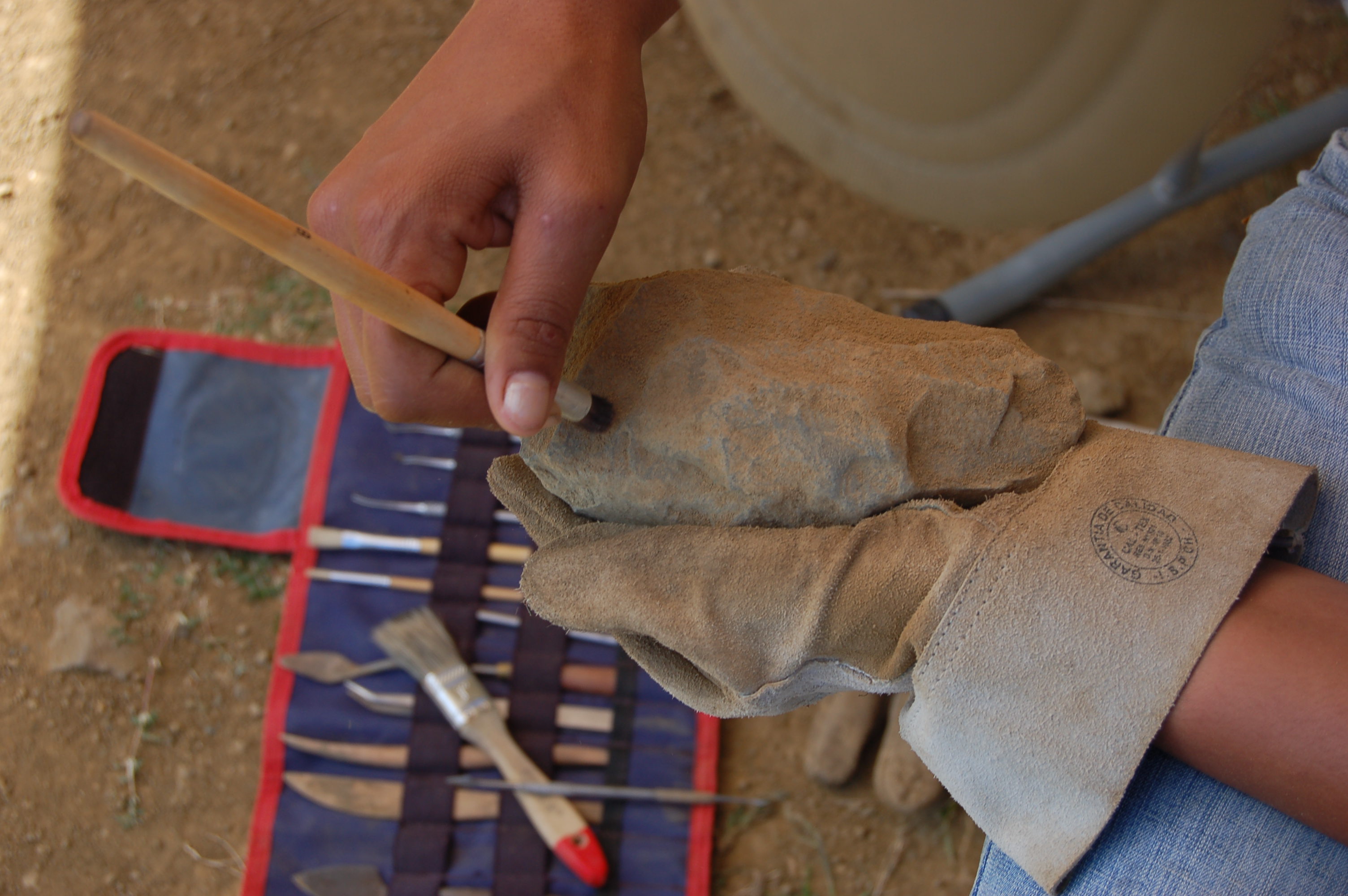
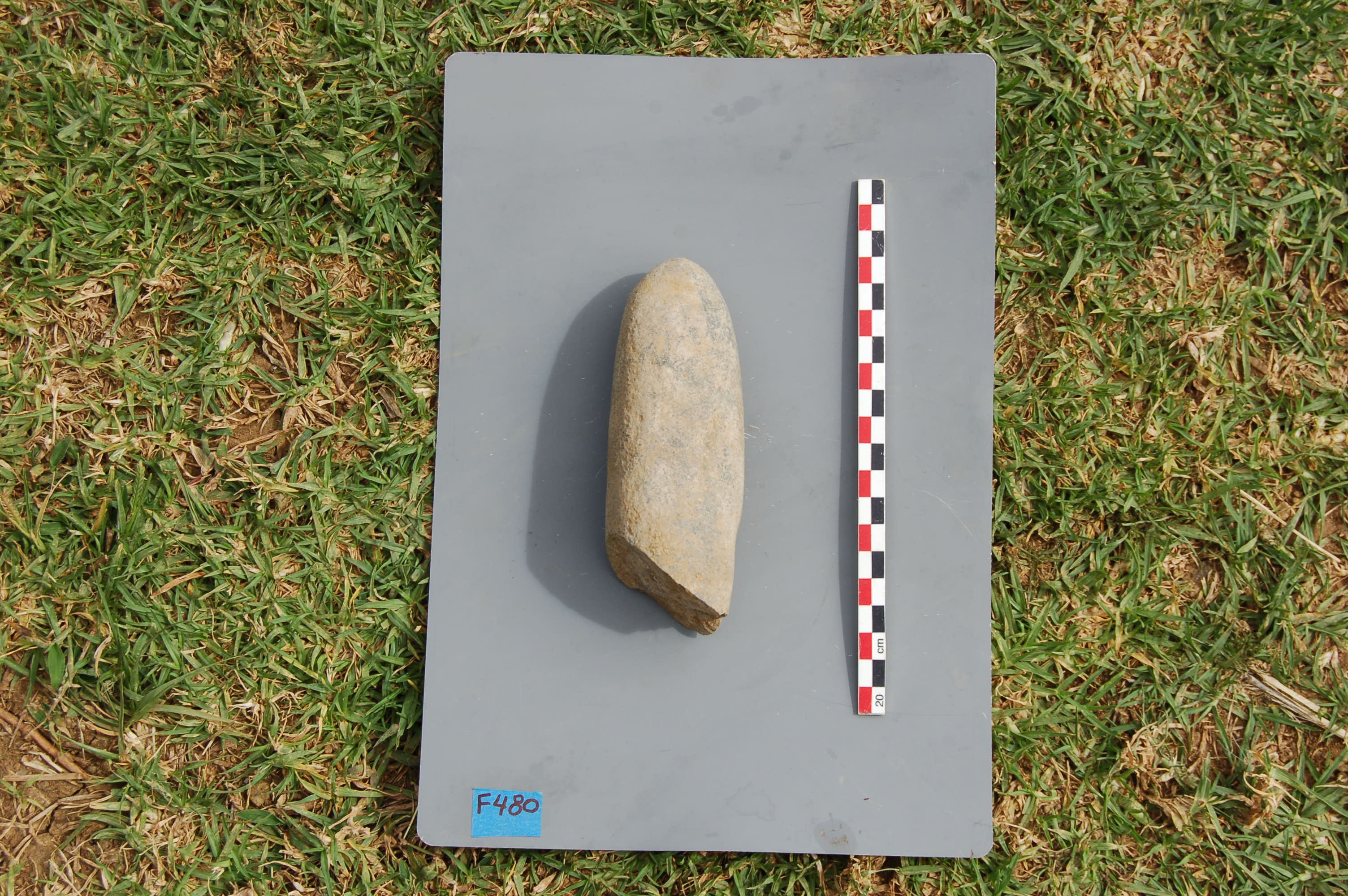
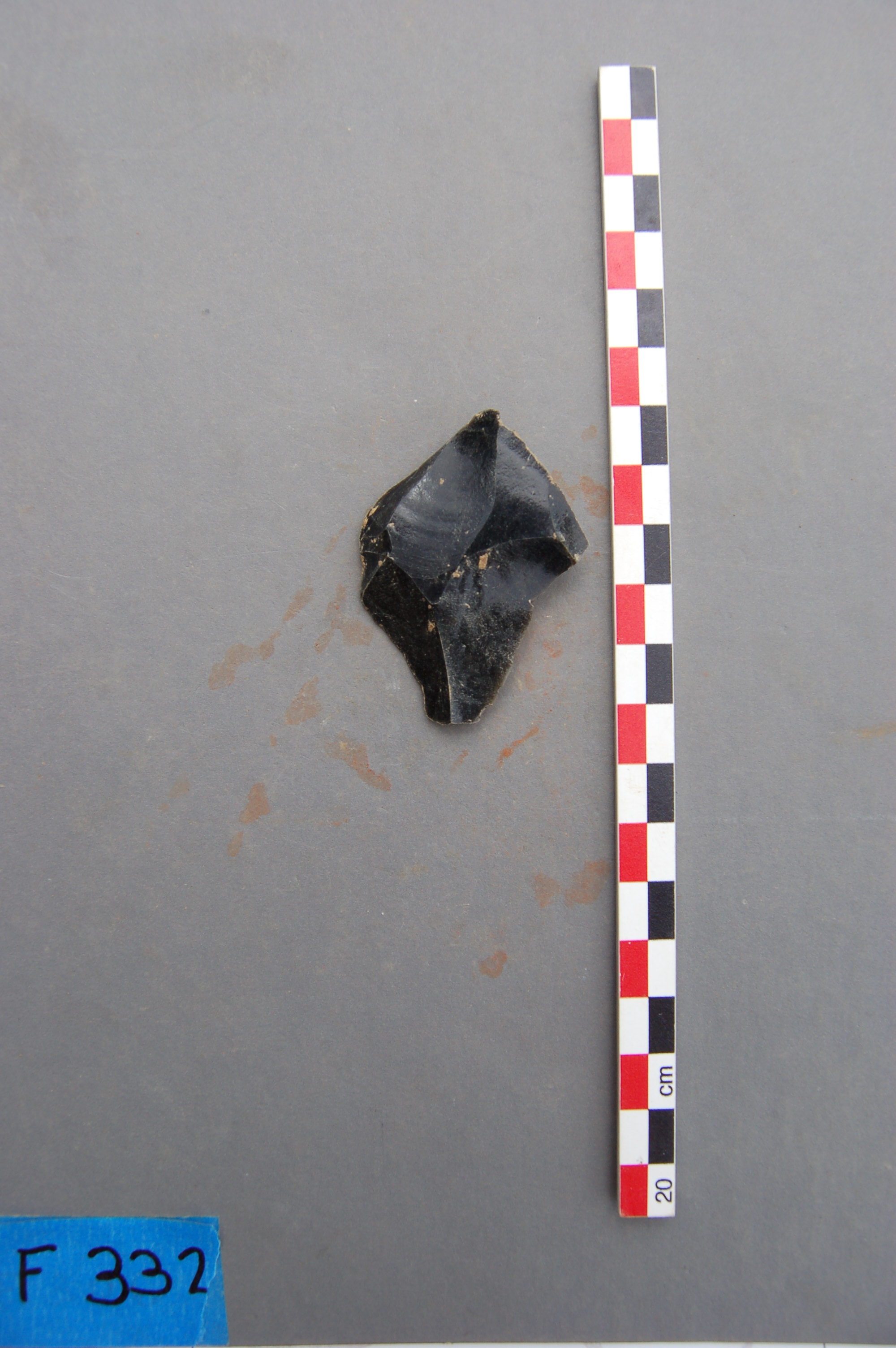

Easter Island Statue Project Conservation Initiative
Season V Excavation Summary
RR-001-156 and Square 4, RR-001-157
Jo Anne Van Tilburg
November 2011
Introduction
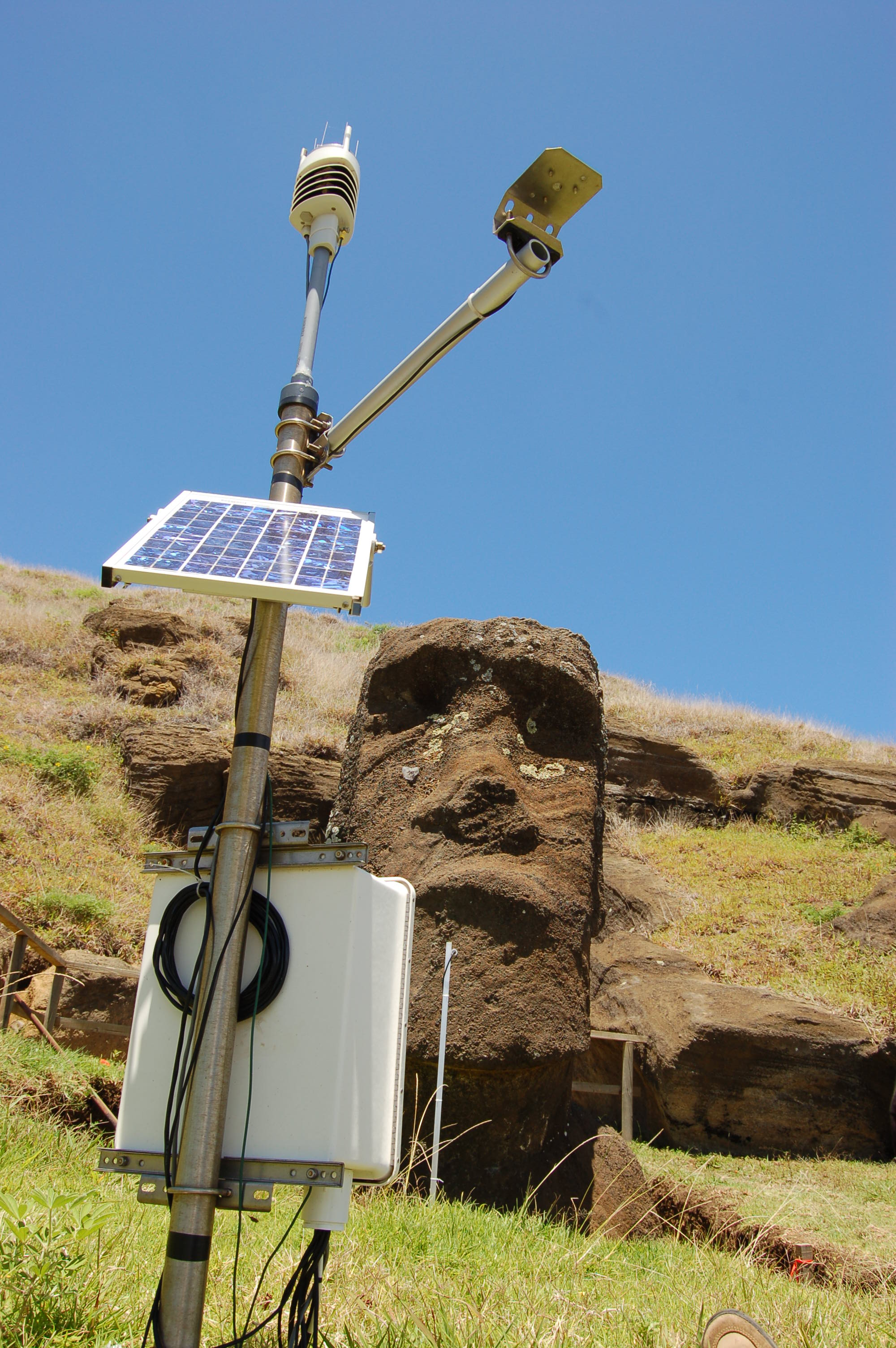
This report is another in a series of reports dealing with the excavation of statues RR-001-156 and RR-001-157 in Rano Raraku quarry, Rapa Nui, Chile. The previous reports were filed with the appropriate Chilean and Rapa Nui agencies and also provided to the general public on the Easter Island Statue Project web site (www.eisp.org). This report deals with the continuing excavation of statue RR-001-156 to the base and Square 4 of RR-001-157. These activities took place during Season V (November 2011) of the Easter Island Statue Project Conservation Initiative.
[Read More…]
-
Uncovering Pacific Pasts
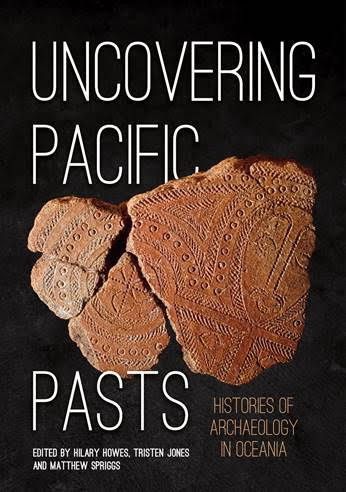
Objects have many stories to tell. The stories of their makers and their uses. Stories of exchange, acquisition, display and interpretation. This book is a collection of essays highlighting some of the collections, and their object biographies, that were displayed in the Uncovering Pacific Pasts: Histories of Archaeology in Oceania (UPP) exhibition. The exhibition, which opened on 1 March 2020, sought to bring together both notable and relatively unknown Pacific material culture and archival collections from around the globe, displaying them simultaneously in their home institutions and linked online at www.uncoveringpacificpasts.org. Thirty‑eight collecting institutions participated in UPP, including major collecting institutions in the United Kingdom, continental Europe and the Americas, as well as collecting institutions from across the Pacific.
Uncovering Pacific Pasts is available for free download, including Jo Anne Van Tilburg’s chapter, “Intelligent Eyes: Visualising Rapa Nui (Easter Island) Archaeology“.
Posted on June 27th, 2022 by admin |
-
Radiolab: The Dirty Drug and the Ice Cream Tub
Radiolab tells the surprising story behind rapamycin in the latest episode The Dirty Drug and the Ice Cream Tub.
Posted on June 4th, 2021 by admin |
2021 Lectures
UCLA Cotsen Institute of Archaeology
April 9, 2021
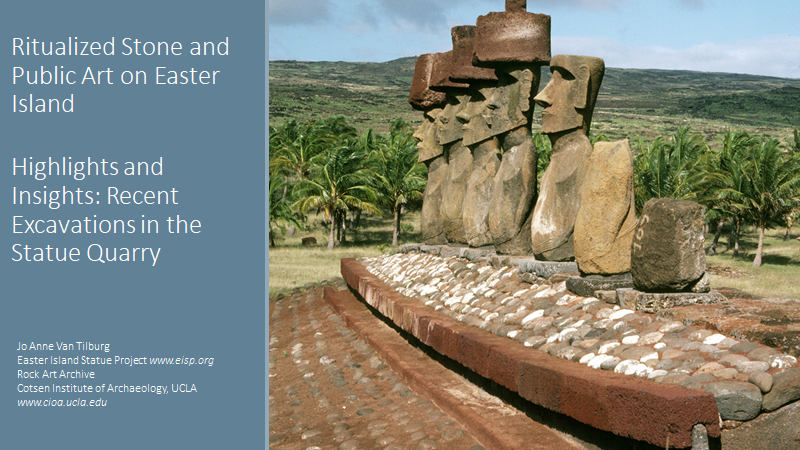
Ritualized Stone and Public Art on Easter Island: Highlights and Insights of Recent Excavations in the Statue Quarry – Jo Anne Van Tilburg
Watch the recording on YouTube: https://youtu.be/vFc6MASfFNA
University of Tennessee McClung Museum
February 4, 2021
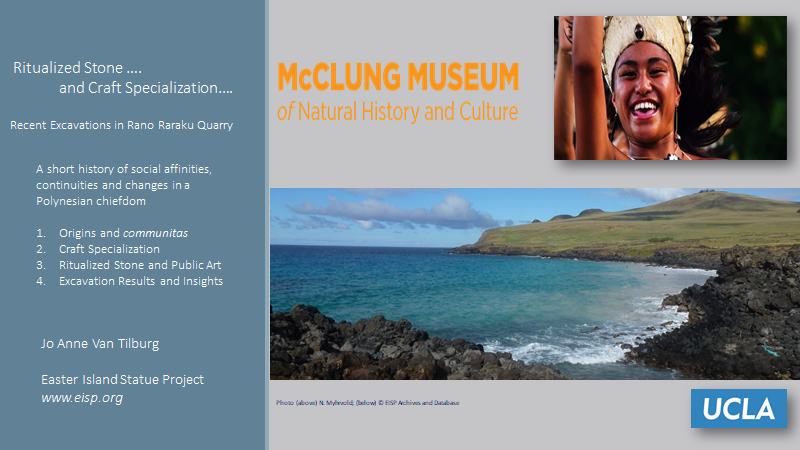
“Ritualized Stone and Craft Specialization: Recent Excavation in Easter Island’s Statue Quarry” presented by Dr. Jo Anne Van Tilburg
Westwood Women’s Bruin Club
March 18, 2021
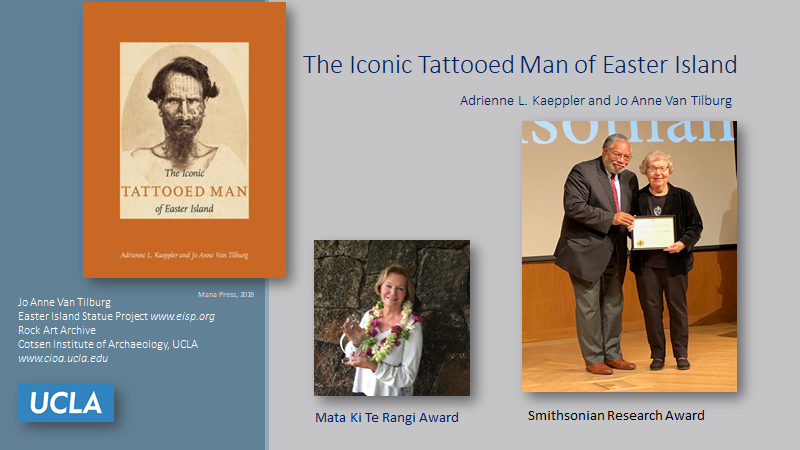
“The Iconic Tattooed Man of Easter Island”
Posted on May 1st, 2021 by admin |
-
Mana Press: The Iconic Tattooed Man of Easter Island
MANA PRESS BOOK 1
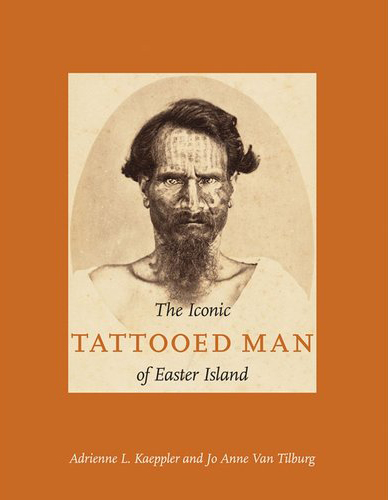
The Iconic Tattooed Man of Easter Island
by Adrienne L. Kaeppler & Jo Anne Van Tilburg
(more…)Posted on March 22nd, 2019 by admin |
Finding Solutions for Protecting and Sharing Archaeological Heritage Resources
Dr. Van Tilburg has contributed a chapter to the book Finding Solutions for Protecting and Sharing Archaeological Heritage Resources. The chapter, entitled “Seeking Solutions: An Archaeological Approach to Conservation of a Threatened Heritage on Rapa Nui (Easter Island)” was co-authored with Christian Fischer, Mónica Bahamondez Prieto and Cristián Arévalo Pakarati.
Posted on December 21st, 2015 by EISP Staff |
Easter Island: Archaeology, Ecology, and Culture
by Jo Anne Van Tilburg
Foreword by John Mack
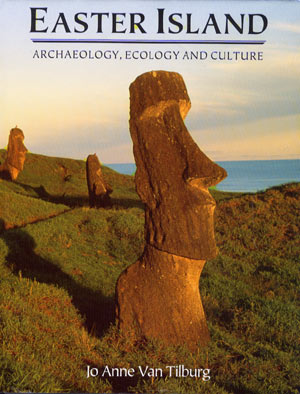
Hardcover, 232 pages
30 color and 124 B&W illustrations
Smithsonian Press (October 1995)
Posted on May 7th, 2009 by EISP Staff |